
Book Reviews

Click here for books by Ashley Croft on Amazon

NEW for 2010
Title: The Shaolin Temple - A History and Evolution of Chinese Martial Arts, Zen Buddhism and the Shaolin Warrior Monks
Author: Ashley Croft
Publisher: Martial Arts Publishing Limited
Synopsis:
Following five years of research and numerous trips to China and the Shaolin Temple, Ashley Croft has written a history of the Shaolin Temple and its world-renowned soldier monks. This has included speaking with the surviving Shaolin Monks, getting access to the most sacred parts of the temple and getting translations of inscriptions on stone tablets at the temple itself that are hundreds of years old. Ashley has also researched and had translated many Chinese documents not yet available to the wider world. This is a great read with many tales of heroic feats of the monks who have undoubtedly helped to shape the martial arts we practice today. The book can be ordered from all bookshops or online from Amazon.

The Shaolin Temple has a fascinating and intriguing past. It started with a small covered platform built at the base of the Songshan Mountains on the order of Emperor XiaowenEmperor Xiaowen for an Indian monk named BatuoBatuo, as a place for him to translate scriptures, and to spread the word of Buddhism. The year was 495.

It is known that the forest and region surrounding the temple was often plagued with bandits. Wild beasts such as tigers and bears are also known to have roamed freely. This is recorded on early stone tablets preserved at the temple. As a consequence some of the monks trained in martial arts to act as a protection force for the temple and its property. Records suggest this occurred almost as soon as the first stone was laid. BatuoBatuo´s early disciples are said to have been exponents of martial arts and were the founding fathers of a regiment of warrior monks that are known in Chinese as Seng Bing, meaning literally monk soldiers. The word seng means monk and bing soldier. Over time the warrior monks became an inseparable part of the temples culture and a national tradition that has continued throughout the temples 1500 year history.

Over time the monk soldiers were a combination of home grown martial artists who learnt and developed their fighting skills within the Shaolin Temple, and people who entered the temple already skilled in some form of fighting art. It is not hard to imagine that some of the monk soldiers were probably hired for their fighting skills and were in effect mercenaries similar to what occurred with the Knight Templar´s in medieval Europe in the 1300´s.

At times the martial art skills of the monk soldiers were used outside of the original protective remit. There are records of Shaolin monks’ engagement in battles across China in support of the ruling dynasty and on occasion as part of an orchestrated rebellion to remove the incumbent emperor and with the emperor the dynasty concerned.

The first of such recorded feats was as early as 621 when 13 Shaolin monks assisted Prince Li Shi MinLi Shi Min (who became Emperor TaizongEmperor Taizong of the Tang Dynasty) in a decisive battle against the forces of a rival warlord Wang Shi CongWang Shi Cong. A contemporary record of this event is carved into a stone stele at the Shaolin Temple which names the 13 monks involved. To reward the assistance provided Li Shi Min gifted the Shaolin Temple with a watermill and land, and the monks themselves were offered official titles. This and many other martial feats that have been attributed to the Shaolin monks are described in detail within book. The book also provides a photographic journey through the temple and its main buildings.

There is more to the Shaolin Temple than its martial arts. What is not so well known is it was the birth place of Chinese Chan Buddhism which is more commonly known across the world as Zen. The creator of Chan Buddhism and therefore the first ancestor of the now widely practiced Zen sect was the Indian monk BodhidharmaBodhidharma (Da Mo in Chinese). Bodhidharma arrived at the Shaolin Temple in 527 and legend states that on arrival he found that the monks in general were in a poor state of health and unable to cope with the long periods of meditation required when practicing his style of Buddhism. He reportedly climbed the Shaoshi peak and lived a hermitic life for nine years during which time he meditated and contemplated the dilemma. When he emerged he started to teach a series of exercises to the monks to help with the vigours of long periods of meditation. These exercises are thought to be the forerunner of Shaolin Qigong and are known as Shi Ba Louhan ShouShi Ba Louhan Shou (18-hands of arhat18-hands of arhat).

The Shaolin Temple has over the years occupied substantial tracts of land with satellite buildings being located as far as 3.5 km away from the main temple compound in the foothills of the Shaoshi peak. At one time the temple is reported to have had 1000 buildings and a curtilage covering 9.3 sq km of cultivated land. At its height the temple housed 1000 monks of which there were 500 monk soldiers. Its past has however been turbulent and its fate often at the whim of the incumbent emperor and the popularity of Buddhism at any given point in time. As a consequence the temple has frequently been attacked and on occasion destroyed by fire. The last attack was in 1928 when warlord Shi YousanShi Yousan led a contingent of his forces against the temple and almost totally destroyed it.

Despite these past attacks the temple has always been rebuilt and survived the test of time. The current temple has again been restored to close to its former glory and restoration work is still ongoing. There are many historical artefacts and relics still in situ that provide an invaluable insight into this amazing place. Anyone who has a serious interest in martial arts and the history and origin of the styles having roots in the Shaolin Temple will find it difficult not to be taken in by the temples story. Likewise anyone interested or following Chan / Zen Buddhism will be fascinated to learn of its history and how the Shaolin Temple played a significant role its development and spread across China, Japan, and Asia, and now the rest of the world.
Title: Shotokan Karate - Unravelling the Kata
Author: Ashley Croft
Publisher:  
Synopsis:  
Many of the kata performed today in Shotokan Karate were created centuries ago by the pioneering karate masters as a means of practising and remembering the myriad of basic techniques that made up their style. The kata are of vital significance as they provide a vehicle for understanding and developing skill in performing these techniques.

This clearly written and easily comprehensible book presents an important insight into the first six Shotokan Karate kata taught: Taikyoku Shodan, Heian Shodan, Heian Nidan, Heian Sandan, Heian Yondan and Heian Godan. It provides detailed instruction on each move , including its physical application against some of the more frequently used forms of attack.

Subjects covered are:
· A detailed exploration of the history of karate, tracing its roots back to China's Shaolin Temple.
· An introduction to the contributions of the pioneering masters who helped shape karate and the kata.
· A description of many of the secret pressure points and their locations.
· An analysis of the kata in which each one is broken down and depicted pictorially, and also described in detail so that the moves can be fully understood.
· A description of at least one kata bunkai [application] for every move in the six kata.


Title: Secret Karate
Author: Ashley Croft
Publisher:  
Synopsis:  
WHEN CREATING KARATE KATA, the Okinawan masters included deadly techniques targeting vital points. But they kept these techniques secret from outsiders and, when karate was exported to Japan, it appears that they chose not to pass on their full knowledge of vital point striking. As a result much of the knowledge on the subject remained hidden from the vast majority of practitioners. In recent times thanks to modern Instructors such as Professor Rick Clark these techniques have been revived, and it is thought that they may help to explain some of the more obscure moves contained within all the martial arts.

This book is the culmination of substantial research by Ashley Croft which will help to demystify the subject and provide a detailed historical perspective on the evolution of Karate generally, tracing its routes back from Japan through Okinawa to China itself.

Subjects covered are:
· Historical perspectives: the evolution of karate, the possible intentions of the ancient masters, and the development of vital point striking.
· Anatomy and Eastern medical concepts. The meridians, acupoints and vital energy flow (Qi).
· Location and description of the pressure points, and the practical application of pressure point strikes.
· Analysing the kata, identifying the possible purpose of the moves, and developing workable combinations using the various vital points.

With over 300 illustrations, this book is an invaluable learning aid for those interested in gaining a deeper understanding of karate kata and exploring the hidden facets of this fascinating martial art.


Title: Shotokan Karate
Author: Ashley Croft
Publisher: Crowood
Synopsis:  
Shotokan Karate is one of the most widely practised styles of karate in the world. For most of its history it has been taught clandestinely, with past masters only entrusting their secrets to a select few pupils. This approach has changed dramatically over the last 75 years, with karate being exported throughout the world. Topics include: fundamental principles and philosophy; main striking, blocking and kicking techniques; detailed instructions of moves with descriptions of the most common mistakes; flexibility training and the physiology of stretching, and finally provides an insight into the mysterious art of Kyusho Jutsu

Buy it today! In Association with Amazon.co.uk


Title: Karate's History and Traditions
Author: Bruce Haines
Publisher: Tuttle
Synopsis:  
An excellent guide to karate's history and traditions and now includes recent research on the martial arts of Korea and the Philippines.

Title: Pressure Point Fighting
Author: Rick Clark
Publisher: Tuttle
Synopsis:  
A book by one of the world's leading authorities in this fascinating subject.

Pressure-point fighting - the practice of manipulating the body's vital nerve and reflex points for self-defence - offers the ability to neutralize attackers without causing permanent harm. This intricate and temporarily devastating self-defence system has obvious advantages. What has been missing until now is a comprehensive guidebook from the Western perspective. Now, this guide explains all the fundamental pressure-point techniques, illustrated with photographs and pressure-point charts, melding the ancient Asian knowledge with modern Western medicine and science.


Title: Dynamic karate
Author: Masatoshi Nakayama
Publisher: Kodansha
Synopsis:  
Written by Masatoshi Nakayama when he was the chief instructor of the Japan Karate Association. A very detailed analysis that aims to help the reader perfect the karate technique.

Title: Karate-do - My way of life
Author: Gichin Funakoshi
Publisher: Kodansha
Synopsis:  
This text presents the autobiography of the man who made karate an international martial art, in which he recalls his own teachers and of his efforts to define and spread knowledge about karate without compromising its spirit.

Title: Karate-do Kyohan
Author: Gichin Funakoshi
Publisher: Kodansha
Synopsis:  
The 'master text' which is a must for your library. Provides a detailed insight into karate and kata from the founder of Shotokan.

Title: Karate Jutsu : The Original Teachings of Gichin Funakoshi (NEW to be published in August 2001)
Author: Gichin Funakoshi
Publisher: Kodansha
Synopsis:  
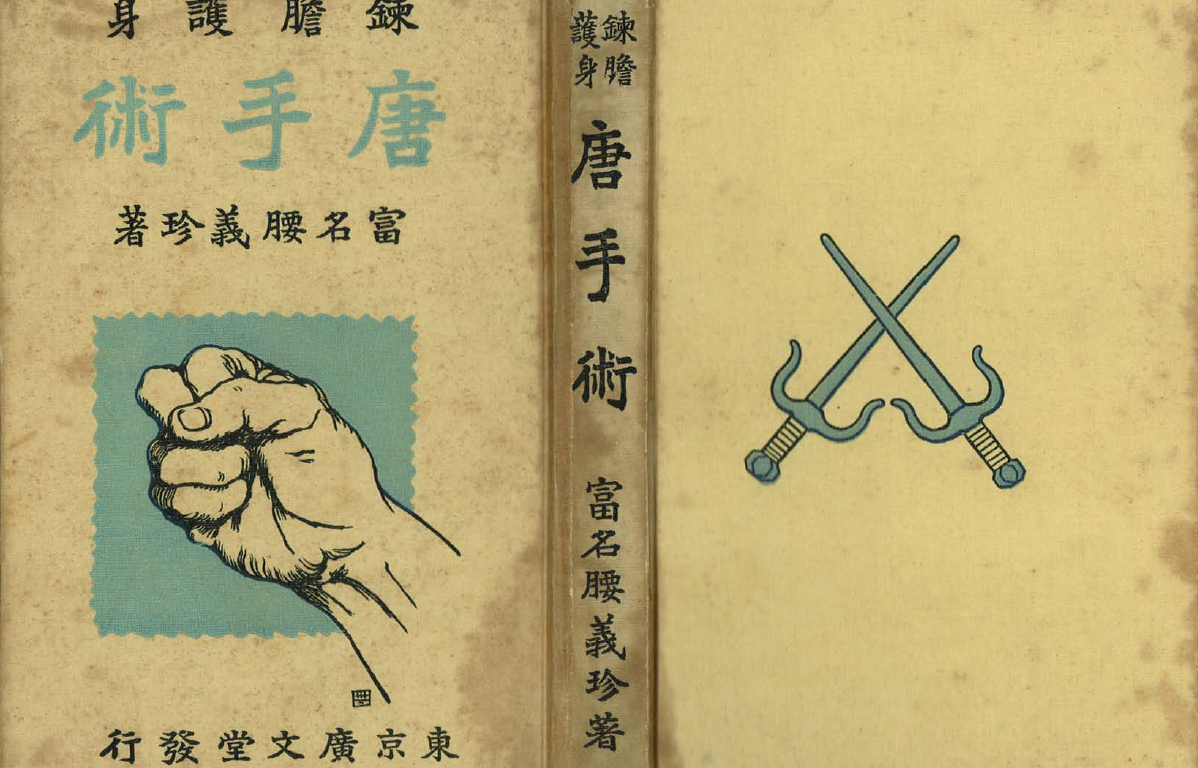
Gichin Funakoshi was the founding father of the principles and techniques of karate in Japan. This is the original text of Master Funakoshi's first exposition of Okinawan karate. The text elucidates his teaching and training methods, while the photographs show Funakoshi demonstrating kata.

Title: The Bible of Karate: Bubishi
Author: Patrick McCarthy
Publisher: Tuttle
Synopsis:  
Treasured for centuries by karate's masters, The Bubishi was a secret text passed from master to student in China and later in Okinawa. Dealing with philosophy, strategy and medicine as they relate to the martial arts, it has been studied and taught from by all of karate's legendary masters. This English translation includes numerous explanations and notes to ease comprehension. The authro also includes research on Okinawan and Chinese history as well as the fighting and healing traditions that developed in thos countries, making it useful for researchers and practitioners alike

Title: Ancient Okinawan Martial Arts : Koryu Uchinadi (Tuttle Martial Arts) Vol. 1
Author: Patrick McCarthy
Publisher: Tuttle
Synopsis:  
Featuring original writings by the founders of some of the world's most popular karate styles, this volume includes untranslated texts by Miyagi Chojun, Mabina Kenwa, Motobu Choki - each of them founders of their own schools of karate.

Title: Ancient Okinawan Martial Arts Vol 2
Author: Patrick McCarthy
Publisher: Tuttle
Synopsis:  
Featuring original writings by the founders of some of the world's most popular karate styles, this volume includes McCarthy's "Standing on the Shoulders of Giants: The Mabuni Kenwa Story", the "Dai Nippon Butokukai" and "Karatedo: Development, Essence, Aims".

Title: Classical Bujutsu
Author: Donn F. Draeger
Publisher: Weatherhill
Synopsis:  
The first in a series on the Japanese fighting arts, this book offers a comprehensive look at bujutsu, Japan's classical systems of martial training which taught the warrior how to gain complete mastery of his weapons and of himself. Bujutsu is the progenitor of judo, kendo, karate and other martial ways known collectively as budo. Evolved amid the warfare of Japan's medieval period, the bujutsu systems prepared the warrior to use his weapons in actual combat, unlike the later budo. Their technical and psychological training prepared him to confront death at any moment while remaining in complete control.

 
Title: Classical Budo
Author: Donn F. Draeger
Publisher: Weatherhill
Synopsis:  
This text is a history and analysis of the "martial ways" - spiritual disciplines far removed from the goal of simply defeating an enemy.

Title: Beginners Guide to Shotokan Karate
Author: John Van Weenan
Publisher: Paul Hooley
Synopsis:  
A comprehensive guide to Shotokan Karate aimed at beginners through to Brown Belt. Includes the first 6 Shotokan Karate kata and an SKI based kumite programme

Title: 75 Down Blocks: Refining Karate Technique
Author: Rick Clark
Publisher:  
Synopsis:  
An analysis of one of karate's simplest, yet most subtle, techniques. Rick Clark seeks to allow the reader to learn how to evaluate variations and applications quickly and efficiently and then apply that analysis to daily martial arts practice. He describes the principles underlying the technique and explores how to seek out the information necessary to optimize all applications and strategies for an array of self-defence skills